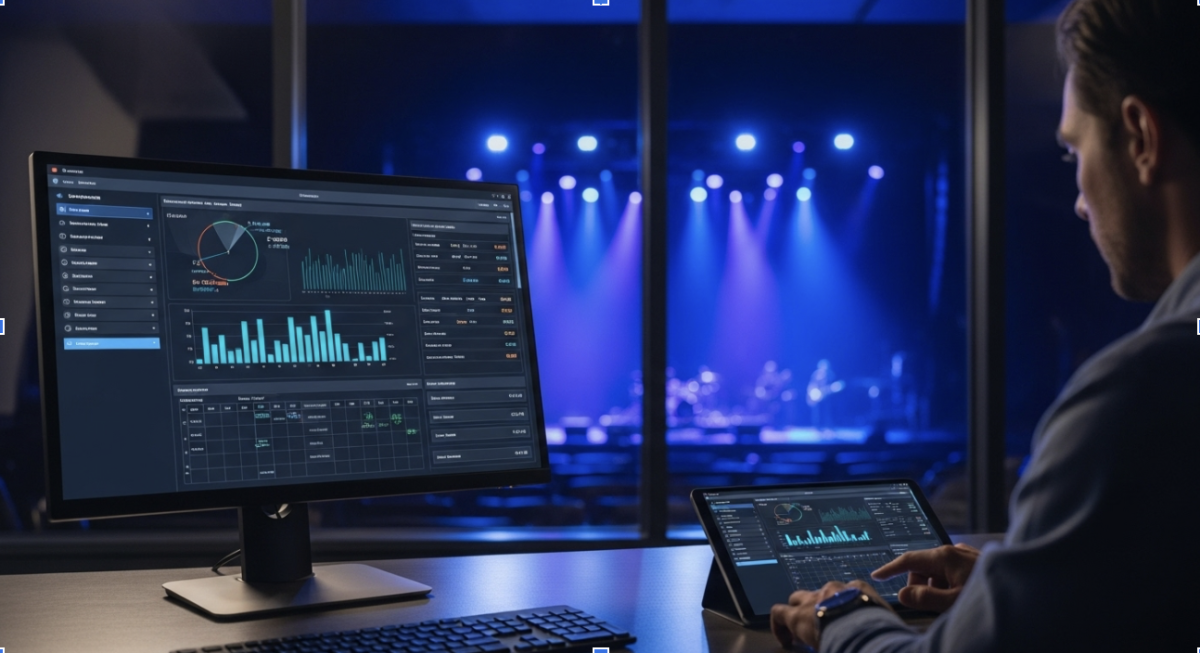
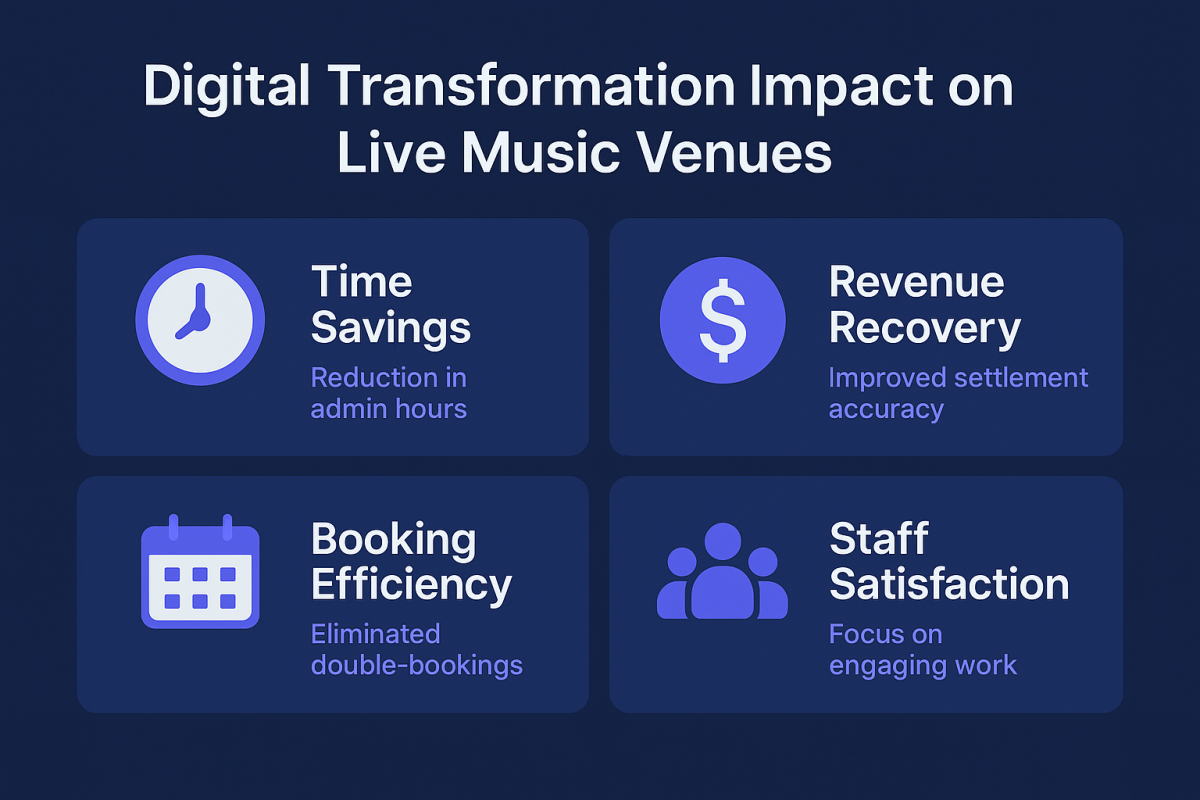
Venues embracing digital transformation in live music operations are seeing dramatic efficiency gains, with industry leaders reporting reductions in booking errors and revenue recovery through automated processes.
-
Manual processes consume substantial weekly hours on administrative tasks that automation handles in minutes.
-
Digital booking systems dramatically reduce double-bookings while improving artist relations through faster response times.
-
Automated settlement tracking recovers missed revenue by catching calculation errors and overlooked payments.
-
Real-time data integration enables faster decision-making during critical booking windows.
The venues that digitize their operations today will capture the profitable growth others are missing, while those clinging to manual processes risk elimination.
Why Are Live Music Venues Surviving on Thin Margins While the Industry Hits Record Billions?
While global recorded music revenues hit $29.6 billion in 2024, with streaming driving 69% of that growth, live venues still wrestle with operations rooted in the fax-and-spreadsheet era. This disconnect between consumer-facing innovation and backend operations is the industry's biggest untapped opportunity.
The digital transformation is now survival. Independent venues are operating on 0.48% profit margins, while the global live music market reached $34.8 billion in recent years. This gap between industry growth and venue profitability signals a fundamental disconnect that digital transformation in live music operations can address.
How Legacy Systems Drain Venue Resources
Collectively, U.S.-based live music venues juggle 55,000 events per year, coordinating hundreds of moving parts for each show. Yet most still rely on the same manual processes that worked when venues hosted half as many events.
Industry professionals spend hours weekly on administrative tasks that modern music venue automation can handle in minutes. These hours multiply across teams as booking managers copy data between spreadsheets, finance teams reconcile settlements manually, and operations staff chase confirmations through email chains.
Consider the typical booking workflow: A promoter calls with an offer. The venue manager checks availability across multiple calendars, calculates break-even numbers in a spreadsheet, emails the offer to stakeholders for approval, manually tracks responses, and finally sends confirmation through a separate system. This process, repeated hundreds of times annually, creates bottlenecks that competitors with streamlined digital booking exploit.
Manual processes generate errors that cascade through operations. A misplaced decimal in settlement calculations costs thousands. Double-booked dates damage artist relationships. Missed contract deadlines result in lost deposits. These errors, individually minor, collectively devastate the narrow margins that define venue operations.

Where Does Digital Transformation in Live Music Deliver Results?
While venues struggle with fragmented systems that create operational chaos, successful transformations focus on three areas that generate immediate and measurable improvements. Financial visibility, scheduling intelligence, and communication automation form the foundation where manual processes cause the most damage and digital solutions deliver the greatest impact.
Real-Time Financial Tracking Eliminates Revenue Leaks
Financial management is the biggest opportunity for most venues. Traditional systems create information silos where ticket sales, merchandise revenue, bar receipts, and production costs exist in separate spreadsheets, assembled only after events conclude.
Modern platforms integrate these revenue streams in real time, providing instant visibility into profitability trajectories. When Live Nation deployed integrated network infrastructure at BottleRock Napa Valley, they achieved seamless connectivity that enabled real-time point-of-sale tracking across the entire festival. This integration allowed for immediate financial decision-making that would have been impossible with disconnected systems.
Digital transformation in live music extends beyond basic tracking. Automated settlement calculations prevent the errors that plague manual processes. Co-promotion splits, traditionally requiring hours of spreadsheet work, automatically generate with full audit trails. Payment tracking eliminates the detective work of chasing deposits and final payments across multiple communication channels.
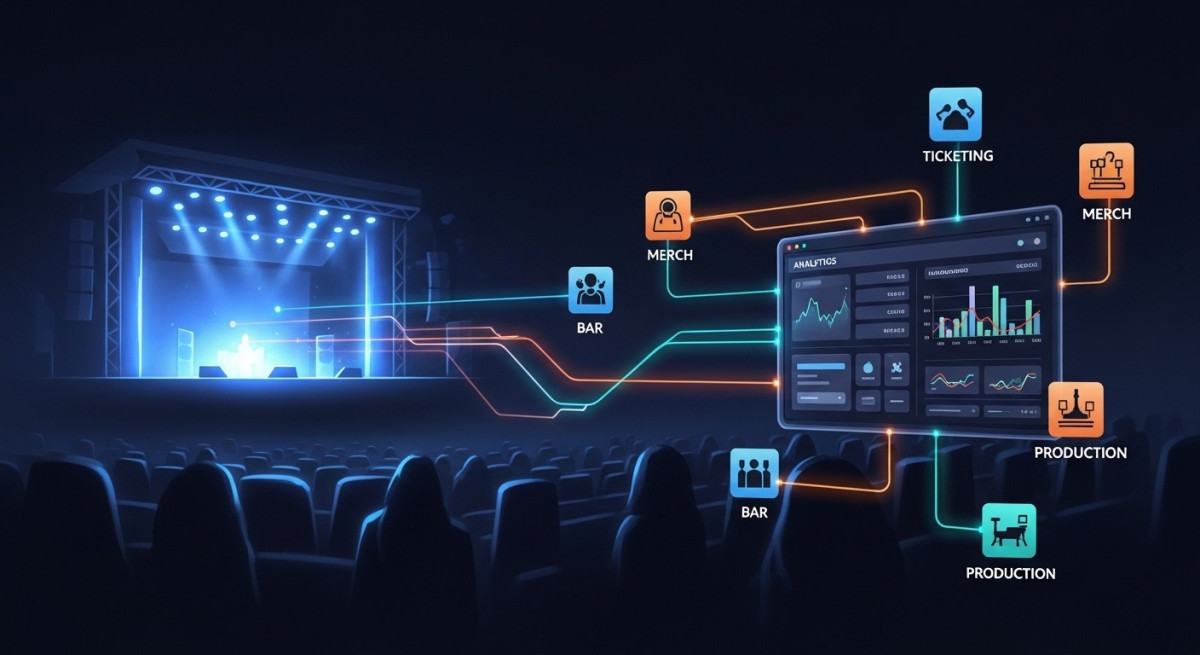
Revenue optimization becomes possible when venues can instantly analyze patterns across hundreds of events. Which show types generate the highest margins? How do different pricing strategies affect sell-through rates? What production configurations maximize profitability? These insights, buried in manual systems, immediately surface in integrated platforms.
Intelligent Scheduling Prevents Costly Conflicts
Music venue automation transforms calendar management from reactive crisis management to proactive optimization. Traditional scheduling relies on venue managers mentally tracking dozens of variables (artist preferences, production requirements, local event calendars, and staff availability) while avoiding conflicts that can cost thousands in penalties.
Digital systems automate this complexity. Intelligent hold management prevents double-bookings while maintaining relationships with multiple promoters. Automated availability checks eliminate the back-and-forth that delays booking decisions. Integration with local event calendars identifies potential conflicts before they become problems.
Modern event management platforms emphasize that streamlined operations and real-time updates ensure all team members stay aligned regardless of location. This coordination proves decisive in competitive booking situations where response speed matters.
Smart scheduling spots hidden revenue opportunities by spacing events to keep your team sharp and your gear working at full tilt. Load-in schedules automatically coordinate with production requirements. Staff scheduling integrates with event calendars to ensure adequate coverage without overstaffing.
Automated Communication Enhances Professional Relationships
Professional communication in live music involves hundreds of stakeholders per event—artists, agents, promoters, production teams, vendors, and staff. Manual communication creates information bottlenecks where critical details get lost in email threads, leading to on-site surprises that compromise event quality.
Digital transformation centralizes communication while maintaining the personal touch that defines music industry relationships. Automated contract generation sends professional offers within minutes of booking decisions. Status updates reach all stakeholders simultaneously, eliminating the telephone game that creates confusion.
The transformation includes document management that provides instant access to contracts, riders, insurance certificates, and technical specifications. When production teams need stage plots at 2 AM during load-in, they access current versions immediately rather than calling venue managers for email searches.
How Do Platforms Create Live Music Workflows?
Individual digital tools provide incremental improvements, but integrated platforms deliver exponential benefits through seamless live music workflows. When booking information automatically populates financial tracking, which feeds into settlement generation, which updates marketing databases, venues eliminate the redundant data entry that consumes hours daily.
Venue operators can instantly analyze profitability by artist, promoter, day of the week, season, and dozens of other variables. These insights inform decisions about pricing, programming, and resource allocation that directly impact bottom-line performance.
All-in-one platforms also future-proof music ops against industry evolution. As new technologies emerge, such as dynamic pricing, blockchain ticketing, and AI-powered marketing, integrated systems adapt through API connections rather than requiring entire system replacement.
What Do Venues Experience Post-Digital Transformation?
Industry reports reveal consistent patterns among venues completing digital transformation. Administrative time drops, freeing managers to focus on revenue-generating activities like artist development and corporate partnerships. Booking accuracy improves, with double-booking incidents becoming rare occurrences.
Financial tracking accuracy increases while settlement processing accelerates. Venues report recovering previously missed revenue through better expense tracking and automated calculation accuracy. Staff satisfaction improves as teams escape repetitive tasks for engagement that actually advances careers.
Perhaps most importantly, venues gain competitive advantages in artist relations. Professional, rapid responses to booking inquiries create preferences among agents managing multiple similar venues. Accurate, timely settlements build trust that generates repeat business and referrals.
What Does the Future Hold for Modern Music Venues?
Digital transformation in live music ops will accelerate as venues recognize the advantages of operational efficiency. Artificial intelligence will automate even more complex decisions, from optimal pricing strategies to artist development recommendations based on performance analytics.
Integration with external systems will deepen, connecting venues directly with ticketing platforms, streaming services, and social media networks for comprehensive audience development. IoT sensors will provide real-time insights into venue operations, from sound level monitoring to crowd density management.
The venues that embrace this transformation today position themselves for sustained profitability.
Frequently Asked Questions
Q: How long does it typically take to see ROI from venue management software implementation?
A: Most venues report positive ROI within the first year through time savings and error reduction. Initial benefits typically appear within the first few months as teams adapt to automated live music workflows and eliminate manual redundancies.
Q: Will digital systems eliminate the personal relationships that define the music industry?
A: Digital transformation enhances rather than replaces personal relationships. Automated routine tasks free managers to focus on relationship building, while professional communication tools improve response times and accuracy, strengthening business partnerships.
Q: How do I choose between specialized music venue software and general event management platforms?
A: Music-specific platforms understand industry nuances like co-promotion settlements, artist rider requirements, and touring logistics that general event software overlooks. These specialized features generate better outcomes for music venues than generic solutions.
Q: What happens to our historical data during the transition to digital systems?
A: Implementation includes a complete data migration that preserves historical information about artist preferences, pricing agreements, and operational notes. This knowledge remains fully accessible in the new system with improved search and analysis capabilities.
Join the Venues Transforming Their Operations
The transformation from manual to modern operations impacts more than efficiency. Venues that embrace digital transformation in live music position themselves for sustained success, while those clinging to legacy processes risk being left behind. Prism's specialized platform eliminates the operational chaos holding your venue back, providing the automation and insights that turn booking challenges into profit opportunities.