The independent venue revolution is here. Smart booking technology now gives smaller operations the same firepower that major promoters have enjoyed for years, eliminating spreadsheet chaos while boosting profitability.
-
The event management software market is projected to reach $17.33 billion by 2030, with music-specific platforms experiencing the fastest growth.
-
Modern concert booking platforms reduce administrative time by hours daily while preventing costly errors.
-
Independent venues using dedicated live music tech report faster settlements, better artist relationships, and improved financial visibility.
The venues that embrace smart venue management now will dominate their markets in the years ahead.
Independent venues have always been the heartbeat of live music. These are the rooms where legends cut their teeth, where local scenes develop their identity, and where fans experience the raw energy that stadium shows can never replicate. But running these spaces has traditionally meant drowning in administrative chaos.
The event management software market is expected to grow from $8.4 billion to over $17 billion by decade's end, and music-specific concert booking platforms are leading that charge. This surge reflects a fundamental shift in how live music management operates. Independent venue owners are no longer willing to accept that disorganization comes with the territory.
What's Driving the Smart Booking Revolution?
The live music industry generated over $33 billion globally in 2023, marking a 25% increase from the previous year. Yet most independent venues still manage this boom with systems designed for a different era. Paper calendars, scattered email chains, and spreadsheets held together by hope and prayers simply can't keep pace with modern touring demands.
Three forces are accelerating the adoption of smart concert booking technology across grassroots venues.
First, artist expectations have evolved. Touring acts and their representatives now expect professional communication, clear deal terms, and seamless settlement processes. Venues running manual operations increasingly find themselves passed over for competitors who can deliver polished, organized interactions from first hold to final payment.
Second, financial pressures demand precision. Rising costs and tight margins leave zero room for the errors that plague manual workflows. A single miscalculated settlement or missed payment deadline can destroy relationships built over years. Smart venue management tools eliminate these risks through automation and real-time tracking.
Third, competition has intensified. Live music tech adoption separates thriving venues from struggling ones. When a touring agent compares two similar rooms, the one offering professional systems and clear communication wins the routing.
What Are Five Essential Features of a Modern Concert Booking Platform?
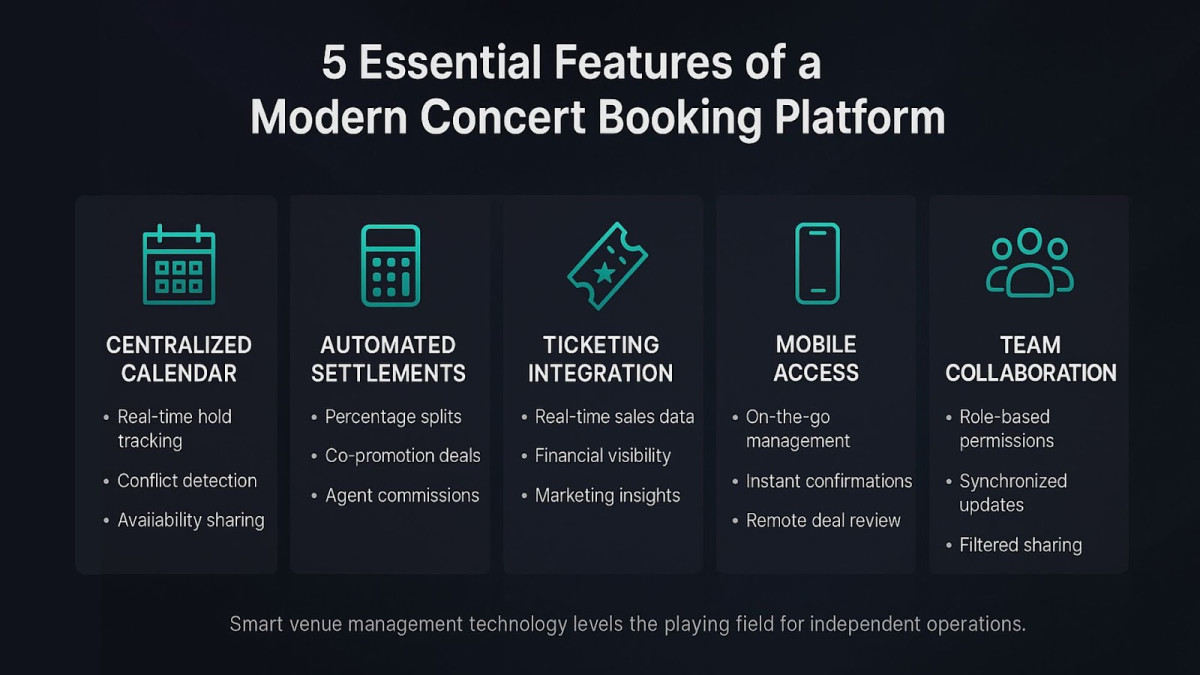
Not all booking software delivers equal value. The difference between basic calendar apps and professional-grade platforms determines whether you're running a serious operation or playing catch-up. Here are the capabilities that separate legitimate independent venue tools from glorified spreadsheets:
-
Centralized calendar management forms the foundation. Look for platforms offering real-time hold tracking, conflict detection, and availability sharing with authorized parties. The ability to view multiple rooms or venues in one interface prevents double-bookings and reveals routing opportunities when tours announce new dates.
-
Automated settlement calculations eliminate the math that consumes hours and breeds expensive errors. Your system should handle percentage splits, co-promotion deals, agent commissions, and the complex revenue-sharing models unique to live music without requiring manual formula building.
-
Integrated ticketing connections provide real-time sales visibility. Knowing exactly where you stand financially throughout the sales cycle enables smarter marketing decisions and faster pivots when shows need attention.
-
Mobile accessibility matters because venue booking happens everywhere. Confirming a hold from a festival backstage or reviewing settlement terms during an airport layover requires platforms built for on-the-go operation.
-
Team collaboration tools keep everyone synchronized without endless email chains. Role-based permissions ensure your booking team sees relevant information while sensitive financials remain appropriately restricted.
These capabilities aren't luxury add-ons reserved for major promoters with enterprise budgets. They represent the baseline functionality that separates professional operations from venues still wrestling with manual workflows. The good news: modern concert booking platforms like Prism have made this technology accessible to independent rooms ready to compete at a higher level.

Why Are Independent Venues Winning with Live Music Tech?
Gaining easy access to professional booking tools has altered competitive dynamics in the music industry. Operations that previously required entire departments can now be managed by lean teams armed with the right software.
Consider the administrative burden facing a typical 500-capacity venue booking 150 shows annually. Each show involves artist negotiations, contract generation, advance coordination, day-of logistics, and post-show settlement. Without automation, these processes consume countless hours weekly.
Venue employees often spend hours daily on booking and ticketing tasks alone. Multiply that across a year, and you're looking at hundreds of hours that could be spent on relationship building, marketing, or simply maintaining sanity during busy seasons.
Smart venue management platforms compress these workflows. Templates speed up offer generation. Automated calculations eliminate settlement math. Centralized communication reduces the back-and-forth that buries important details in email threads.
The real advantage extends beyond time savings. Data visibility enables strategic decision-making that was previously impossible for smaller operations. Understanding which artists drive bar revenue, which nights consistently underperform, and where your expenses trend over time transforms venue management from reactive firefighting to proactive business building.

Independent venues adopting these tools report concrete benefits: faster booking cycles, reduced errors, improved artist relationships, and clearer financial pictures. The playing field between grassroots rooms and corporate-backed operations has never been more level.
FAQ
What makes a concert booking platform different from generic event software? Music-specific platforms understand industry-unique requirements, including artist contracts, guarantee versus percentage deals, co-promotion splits, rider management, and settlement workflows. Generic tools lack these specialized features, forcing venues into workarounds that create inefficiency and errors.
How long does it take to see ROI from booking software? Venues typically notice time savings shortly after implementation as workflows become automated. Full ROI generally materializes within the first year through reduced errors, faster workflows, and better financial visibility that enables smarter decisions.
Can small venues benefit from these platforms? Absolutely. Smaller operations often see proportionally greater benefits because they lack the staff to absorb manual workflow inefficiencies. Automation amplifies what lean teams can accomplish.
Take Control of Your Venue's Future
The independent venue renaissance is well underway, powered by technology that transforms operational chaos into competitive advantage. Grassroots rooms willing to embrace modern tools are proving they can compete with (and often outperform) larger operations weighed down by legacy processes.
Prism was built by live music industry veterans who understand these challenges firsthand. Their all-in-one platform helps venues, promoters, and agencies replace disconnected systems with a secure, mobile-friendly solution covering everything from hold to settlement.